How to Select a Dust Extraction Fan for Industrial Duct Systems
A practical checklist for selecting a dust extraction fan from airflow, pressure loss, dust characteristics, material, motor, duct layout, and safety inputs.
Read more →
A practical checklist for selecting a dust extraction fan from airflow, pressure loss, dust characteristics, material, motor, duct layout, and safety inputs.
Read more →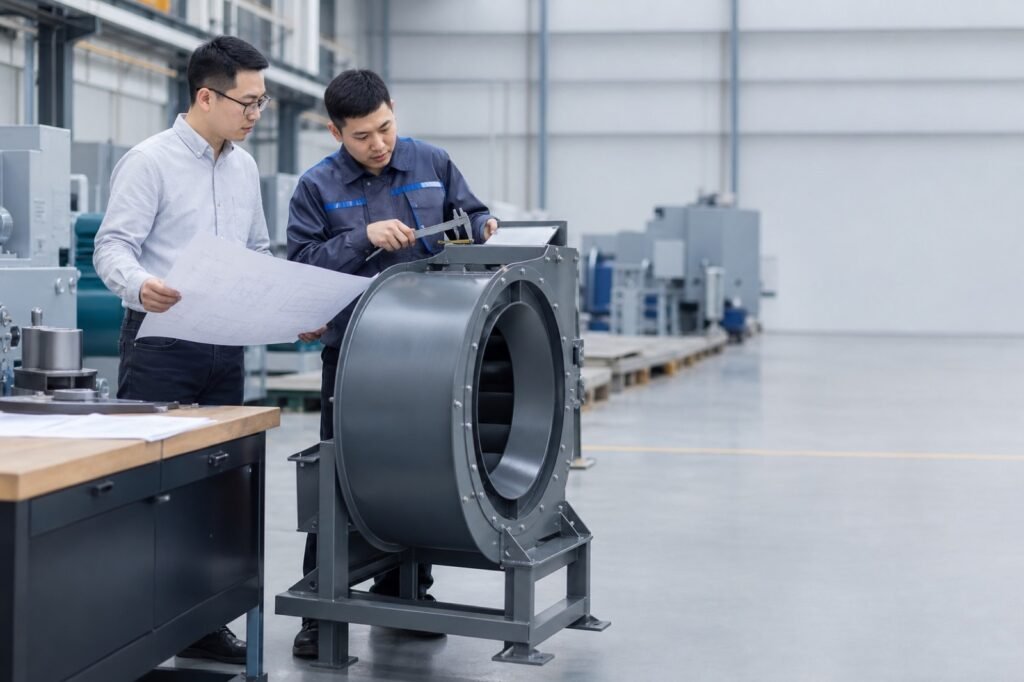
A model number alone rarely describes the complete fan duty. A useful selection begins with the air system, operating environment, installation, electrical supply, and commercial requirements. Performance information Provide the required airflow and pressure whenever they are available. State the units clearly and identify whether the pressure is static or total. If these values are […]
Read more →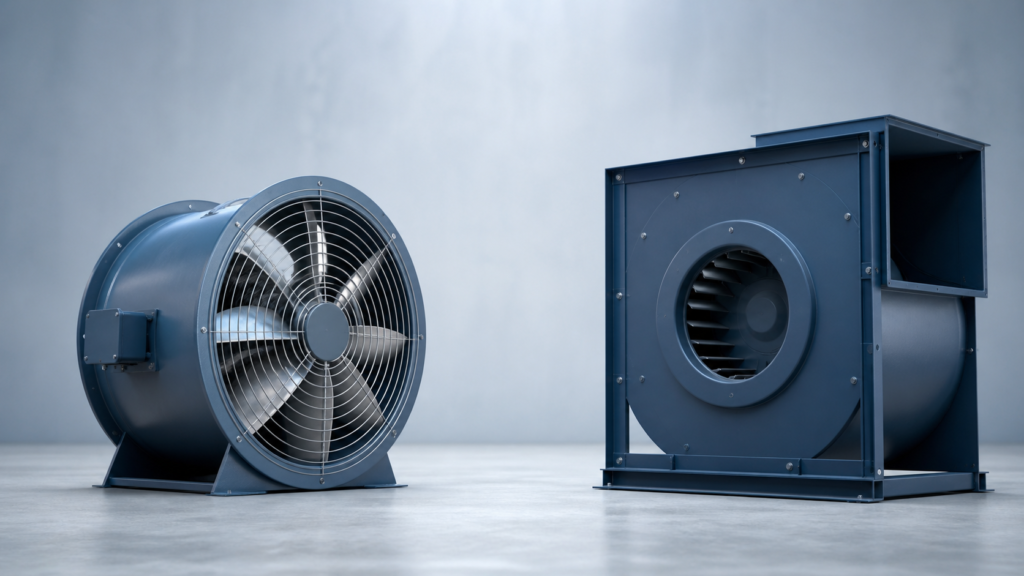
Axial and centrifugal fans can both move large volumes of air, but they respond very differently to system resistance. Choosing between them starts with the required operating point—not simply the fan diameter or motor power. When an axial fan is the better starting point Axial fans are commonly used for high-volume, relatively low-pressure duties such […]
Read more →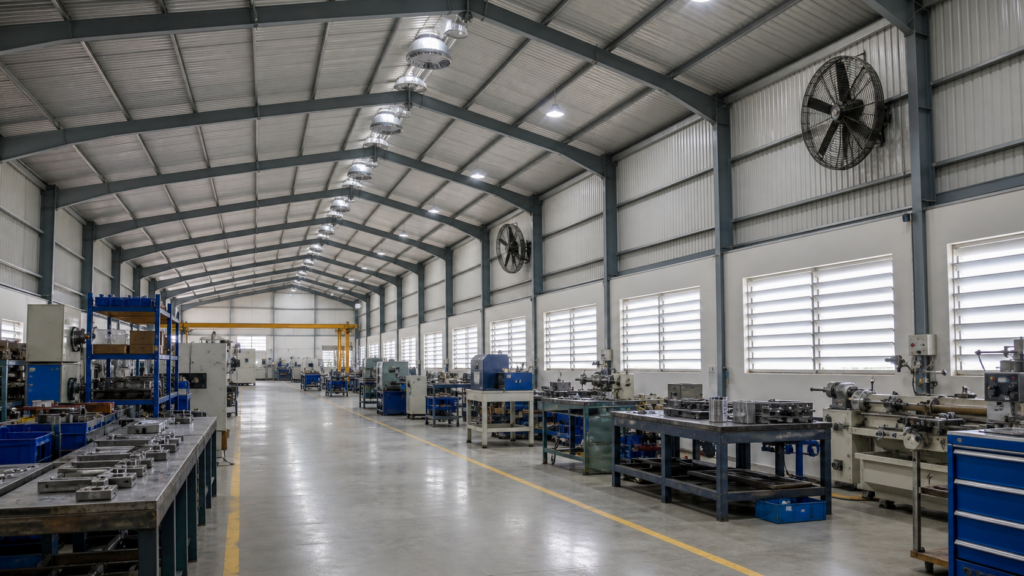
Factory ventilation is not solved by adding exhaust fans at random. The system needs a defined path for outside air to enter, move through occupied and heat-producing areas, and leave without short-circuiting. Understand the building and heat load Record floor area, clear height, roof form, production zones, heat-producing equipment, workforce concentration, doors, windows, and seasonal […]
Read more →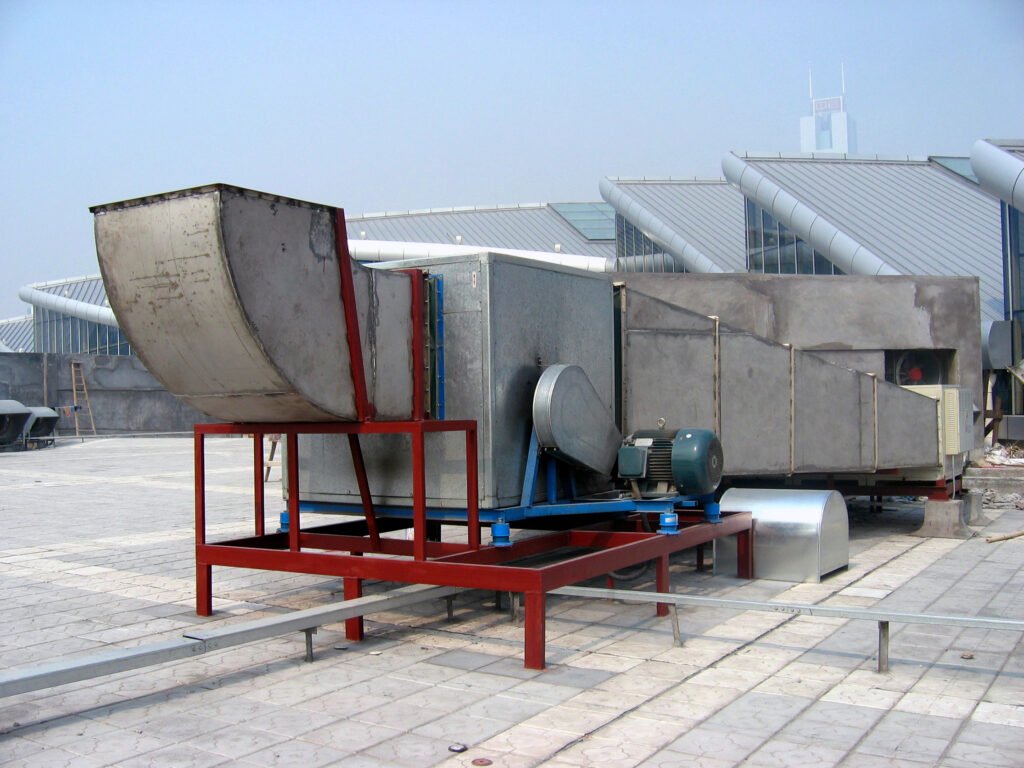
Smoke exhaust fans are selected as part of a complete smoke-control strategy. The project specification, local requirements, duct system, dampers, controls, power supply, and emergency operating condition must be reviewed together. Separate normal and emergency operation Some systems use one fan for daily ventilation and emergency smoke extraction. Record both operating points, including airflow, pressure, […]
Read more →
A fan does not deliver its maximum catalog airflow at every pressure. Its actual operating point is where the fan curve meets the resistance curve of the installed system. Where resistance comes from Straight ducts, elbows, transitions, branches, grilles, filters, dampers, coils, silencers, collectors, and discharge terminals all add pressure loss. Dirty filters and process […]
Read more →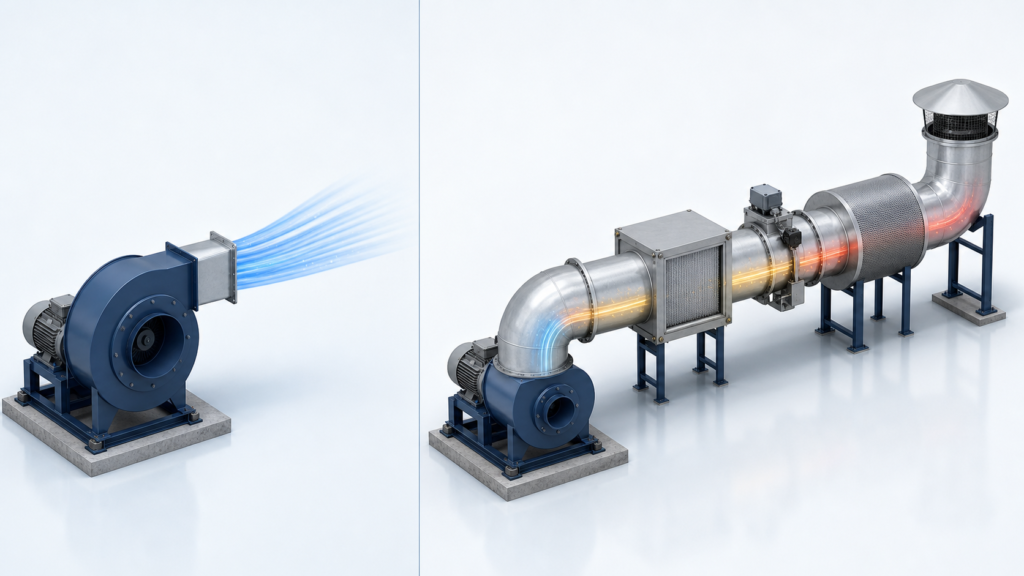
A fan curve shows how a specific fan configuration performs across a range of airflow and pressure. It should be used to confirm the operating point, not treated as a promise that every airflow and pressure value can occur at the same time. Find the required duty point Plot the required airflow against the required […]
Read more →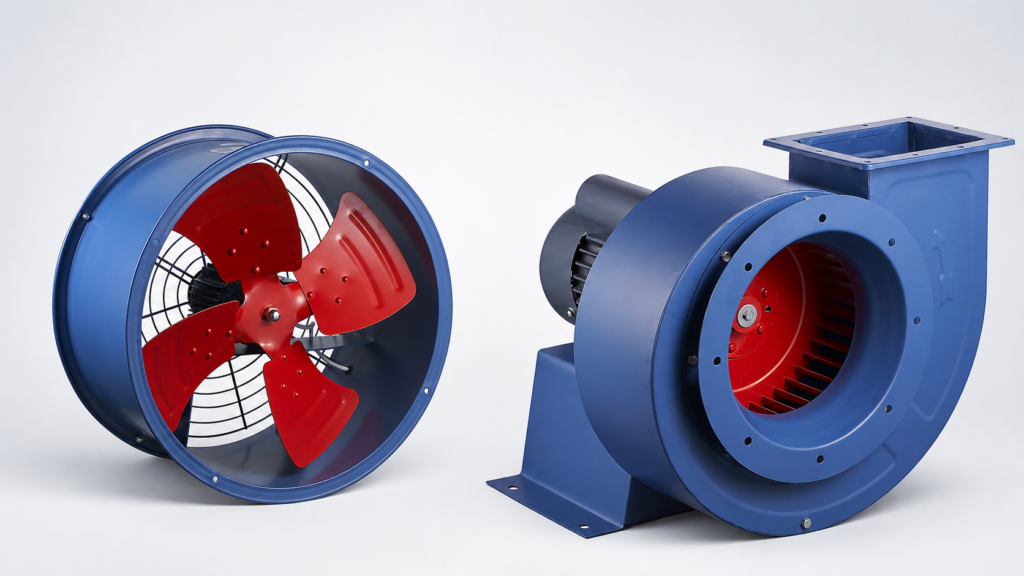
The drive arrangement affects fan size, maintenance, speed flexibility, motor exposure, and installation layout. The right choice depends on the duty and operating environment rather than a blanket preference for one design. Direct drive advantages Direct-drive fans place the impeller on the motor shaft or use a direct coupling. They are compact, avoid belts and […]
Read more →
Material selection should begin with the substance contacting the fan. Outdoor humidity, salt air, cleaning chemicals, corrosive gases, abrasive dust, and high temperature create different risks and should not be grouped under a vague request for an anti-corrosion fan. Describe the exposure State the medium, concentration if known, operating temperature, moisture, condensation, particle size, cleaning […]
Read more →
An industrial fan should not be ordered with only a motor power value. Electrical supply affects motor design, speed, current, controls, and the fan operating point, especially when the destination uses a different frequency. Provide the complete power supply Nominal voltage and acceptable variation Frequency, usually stated in hertz Single-phase or three-phase supply Required motor […]
Read more →