Airflow & Pressure
Operating point, impeller direction, speed, drive arrangement, efficiency target, and motor power.

Configure the fan around your duty and equipment, then move through quotation, order confirmation, production, inspection, documents, shipment, and after-sales coordination with one export team.
A useful OEM discussion begins with the reason a standard product does not fit. It may be a specific operating point, limited installation envelope, corrosive medium, regional electrical supply, noise target, or equipment interface requirement.
We focus the review on changes that affect fan performance, service life, installation, electrical compatibility, and reliable operation.
Operating point, impeller direction, speed, drive arrangement, efficiency target, and motor power.
Housing material, coatings, discharge angle, base, inlet and outlet interfaces, guards, and flexible connectors.
Voltage, frequency, phase, motor power, speed, efficiency class, insulation class, IP protection, and control requirements.
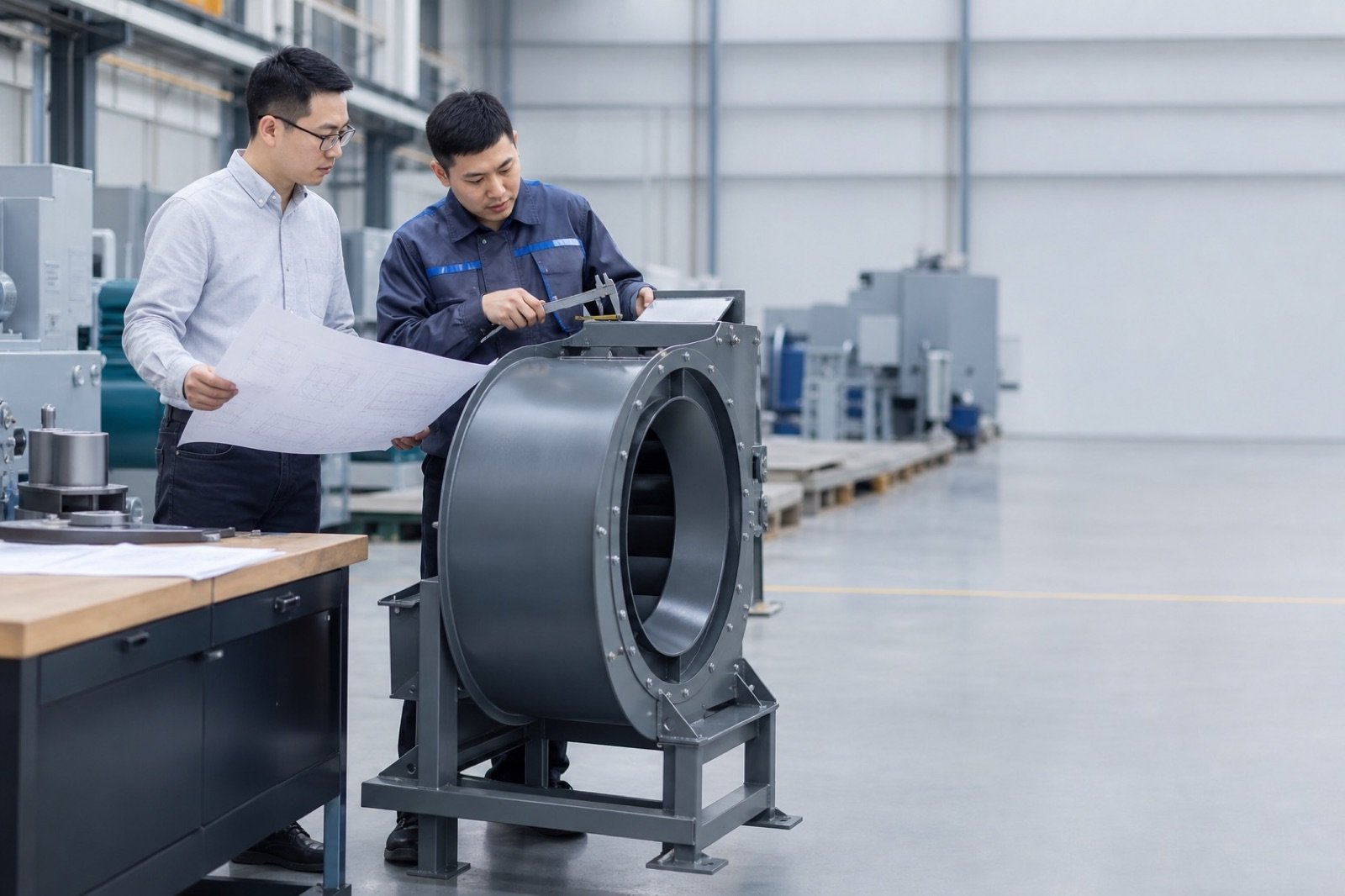
For OEM and repeat export orders, the review focuses on the details that affect fit, performance, electrical compatibility, labeling, packing, and future replenishment.
Identify the baseline product and list every requested deviation.
Review feasibility, configuration, drawing requirements, samples, and acceptance criteria.
Freeze the approved model, performance, materials, motor specification, drawing revision, and acceptance requirements.
Review airflow, pressure, medium, installation, electrical supply, quantity, and destination before confirming a suitable product direction.
Prepare the proposed model, configuration notes, unit price, quantity, lead time, payment terms, and agreed trade term such as EXW, FOB, or CIF.
Coordinate available outline drawings, technical data, proforma invoice, contract details, and the final order configuration.
Release the confirmed specification to production, track the agreed schedule, and communicate material or delivery changes that affect the order.
Arrange agreed inspection points and provide available run-test records, photographs, or third-party inspection coordination when included in the order.
Prepare suitable export packing, packing information, loading coordination, and shipping data according to the product, route, and agreed delivery term.
The exact sequence changes with the product and trade term, but a normal industrial fan export order generally follows this path.
Share the application, airflow and pressure if known, voltage and frequency, quantity, destination, required date, and any drawings or reference models.
We review the duty, recommend a product direction, clarify missing information, and issue a commercial quotation with configuration and delivery notes.
Confirm model, motor, quantity, price, lead time, payment terms, Incoterm, drawings, inspection requirements, and documents in the PI or contract.
Production begins after the agreed approval and payment milestone. The order follows the confirmed specification and planned manufacturing schedule.
Complete the agreed product checks, finish protective export packing, and confirm the packing list, invoice, shipping details, and other agreed documents.
Coordinate dispatch with the buyer's forwarder or the arranged freight service, share shipment information, and support documented after-sales questions.
Send your working conditions, product model, quantity, voltage, destination, and required delivery date for an initial review.