Ventilation & Air Quality
Supply, exhaust, and air exchange for stale air, heat, odors, humidity, and indoor contaminants.
- Confirm room volume and target air changes
- Plan intake and exhaust paths
- Check noise and weather exposure

Browse by the task your system must perform, then use the industry context and project conditions to narrow the suitable fan direction.
Application is the primary selection path because it defines the airflow task, system resistance, airstream condition, and operating objective.
Supply, exhaust, and air exchange for stale air, heat, odors, humidity, and indoor contaminants.
High-volume circulation and heat extraction for workshops, warehouses, equipment rooms, and production lines.
Normal ventilation and emergency smoke extraction for buildings, basements, tunnels, and industrial facilities.
Source capture and process exhaust for welding fumes, grinding dust, coating, cutting, and dusty operations.
Stable airflow through ducts, filters, silencers, heat exchangers, and other system resistance.
Air movement for grain, fibers, scraps, powders, and production-line pneumatic transport.
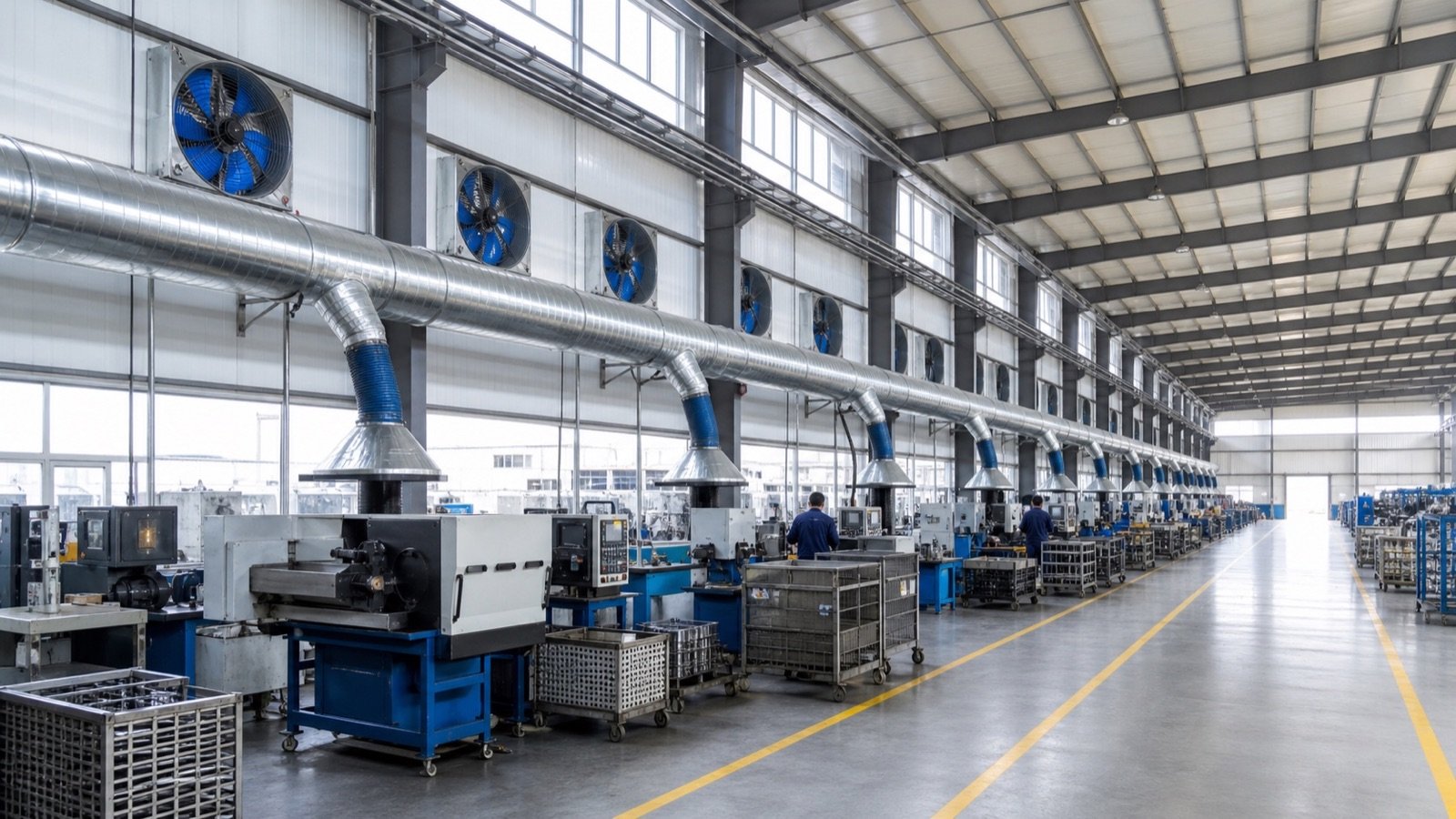
For workshops, production lines, dust points, and ducted systems, the right fan direction depends on the task, pressure loss, medium condition, installation space, and operating schedule.
Industry context helps identify temperature, contamination, corrosion, hygiene, operating-hour, safety, and documentation requirements.
Share the process, space, heat, smoke, dust, airflow path, operating hours, and project objective.
Establish airflow, pressure, temperature, airstream, installation, motor supply, and control requirements.
Choose fan type, model, drive, material, orientation, accessories, documentation, and packaging.
Review how ventilation requirements, environmental conditions, product direction, and export preparation come together in real project scenarios.