
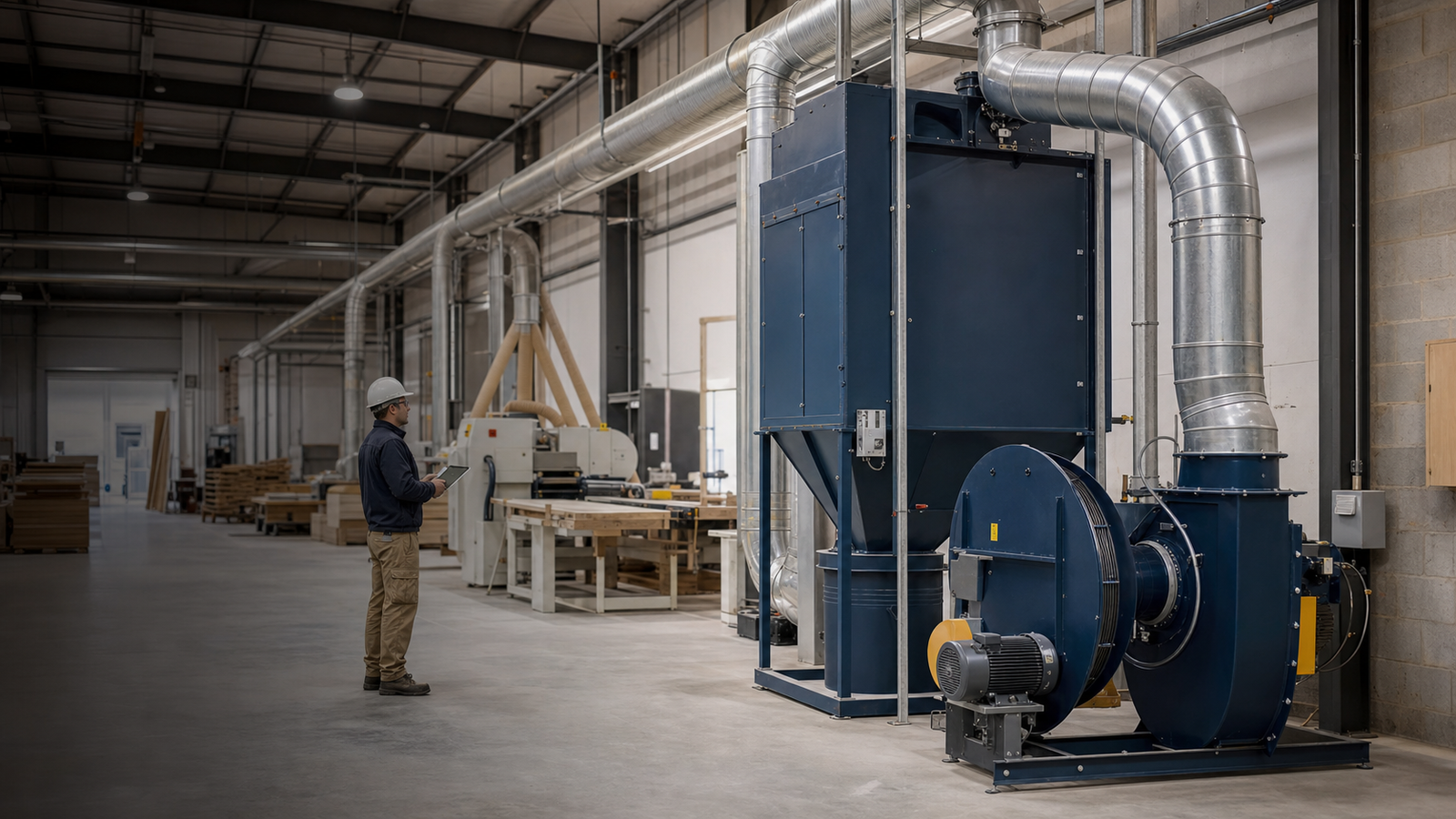
This project case describes the planning approach for a dust collection fan solution for a woodworking workshop. The purpose was to organize the key technical and delivery information needed before equipment selection and production. The case is presented without customer-identifying details and does not claim site-specific performance results; it focuses on the selection considerations that are useful for similar dust-extraction projects.
Project requirement
Woodworking operations can produce chips, fine dust, and airborne material at cutting, sanding, routing, drilling, and finishing stations. A dust collection system needs to move the required volume of air through hoods, branch ducts, filters, separators, and the main duct route while maintaining the conditions needed for collection and transport.
The initial review considered the number of connected machines, expected operating combinations, collection-point layout, duct lengths, material characteristics, filter arrangement, and available installation space. These inputs are important because the fan must be selected for the resistance of the complete system, not only for a catalogue airflow value.
Dust collection fan solution review
The dust collection fan solution was reviewed as a ducted centrifugal fan arrangement. This product direction is commonly considered where a system needs to overcome duct resistance and maintain airflow through collection equipment. The proposed configuration was assessed against the target duty point, expected static pressure, inlet and discharge direction, motor requirements, and the intended operating schedule.
The review also considered where the fan would sit in relation to the separator or filtration equipment. Placement affects the airstream, maintenance access, duct design, and the components exposed to collected material. The final arrangement should follow the agreed system layout and applicable local safety requirements for the actual installation.
Understanding the material and airstream
Material characteristics matter in a dust-extraction application. The project review recorded the type of wood dust and chips, the approximate particle size, moisture conditions where relevant, collection points, and whether the airstream might include other process contaminants. This information helps the project team consider suitable construction, wear points, cleaning access, and filter coordination.
Dust-control systems must be designed and operated with appropriate site safety measures. The fan supplier can review the equipment scope, but the buyer, system designer, and installation team should confirm the complete safety strategy, applicable standards, duct arrangement, filtration method, explosion-protection requirements where relevant, and commissioning procedure for the actual site.
Mechanical and installation coordination
The mechanical review covered fan base dimensions, duct connection size, inlet arrangement, discharge direction, motor access, inspection clearance, lifting access, and maintenance space. These details are particularly useful when a new fan must fit a constrained workshop layout or replace existing equipment without extensive duct changes.
Where flexible connections, dampers, guards, access doors, or vibration-control components are required, they should be identified in the approved order documentation. Clear drawings and photographs of the available installation area can reduce uncertainty before the equipment is released for production.
Electrical, inspection, and delivery preparation
The electrical review recorded voltage, frequency, phase, motor power, and the required connection arrangement. The inspection scope then considered product identification, visible assembly condition, fasteners, protective finish, guards, accessories, rotation-direction marking, and packing. The exact checks and records should be agreed with the purchaser before production.
For delivery, the document set may include the order confirmation, specification, packing list, operating guidance, electrical information, drawings where agreed, and inspection records where required. Consistent equipment labels and order references support warehouse receiving and installation preparation after arrival.
Key planning points for similar projects
A dust collection fan solution benefits from accurate early information. Useful inputs include the machine list, number of collection points, duct layout, target airflow, pressure estimate, existing fan information, material characteristics, electrical supply, installation photos, destination, and required documents.
With the system duty and project constraints documented clearly, the selection process can focus on a practical fan direction, suitable construction, maintainable installation layout, and orderly delivery preparation. This creates a stronger foundation for the detailed engineering and site commissioning work that follows.