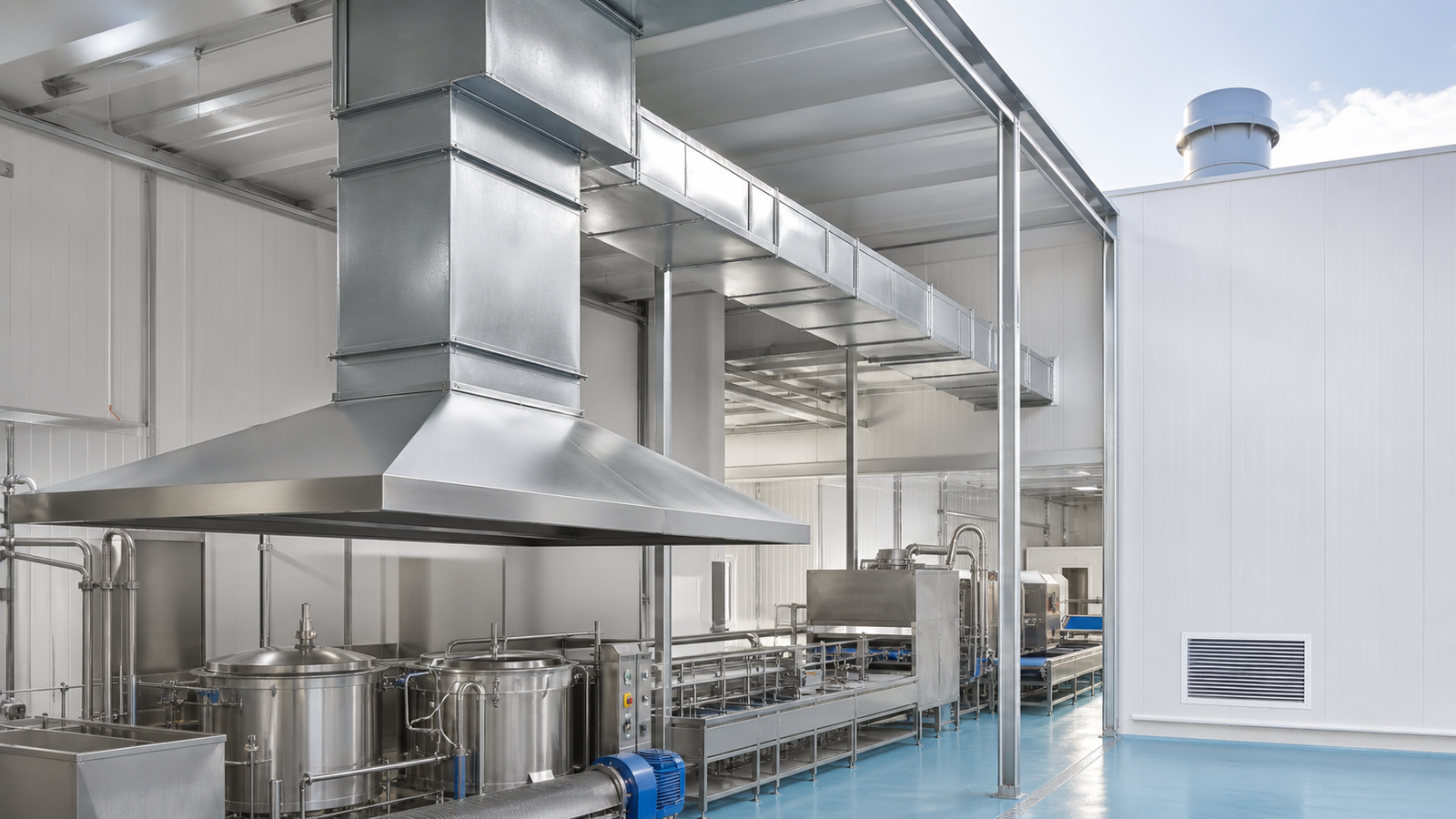
Food processing ventilation system planning requires more than installing an exhaust fan above a production line. HDFAN has expanded its project-review support for food-processing facilities that need to manage heat, steam, humidity and process odours from cooking, washing and thermal-processing operations.
A coordinated airflow path
Food-processing areas can generate large amounts of warm, humid air during daily production. When that air is not captured or discharged in a planned way, it can collect beneath the roof, create condensation risk and move odours into adjacent rooms. A practical food processing ventilation system therefore needs a continuous airflow path from fresh-air entry to source extraction and final heat discharge.
HDFAN’s planning approach combines low-level make-up air, source extraction at cooking and washing equipment, and high-level discharge of residual heat and humidity. The exact arrangement depends on the equipment layout, duct route, production schedule, operating temperature and available installation space.
Three levels of ventilation support
- Source extraction: SWF mixed-flow ventilation fans can be applied to ducted extraction from collection hoods above cooking and washing areas. The SWF series supports air temperatures up to 80°C, making it suitable where the expected exhaust air temperature requires this operating range.
- High-level discharge: DWT-I FRP roof axial fans can remove hot and humid air that rises to roof level. The corrosion-resistant FRP construction is well suited to humid environments, and the series supports air temperatures up to 60°C.
- Controlled make-up air: BF cabinet fan units can provide filtered fresh air to the operating area. Where local airflow support is needed, SF axial fans can also be considered for fixed, adjustable or movable workstation delivery.
Review the fan system as a whole
Each fan should be selected against the actual required airflow and static pressure, not only the room size or a catalogue motor rating. The review should include hoods, duct length, elbows, transitions, dampers, filters, discharge conditions and the intended route for replacement air. These components affect system resistance and the final operating point of the selected fan.
For facilities in hot and humid climates, the material and temperature limits of the selected equipment also require attention. The air stream at the fan, potential cleaning-chemical exposure, roof condition, local humidity and service access should be confirmed before order. Intake filters should be accessible for replacement, while the fan and duct installation should leave sufficient space for inspection and routine cleaning.
Maintaining the right pressure balance
In a food processing ventilation system, make-up air is as important as exhaust. If air is removed without a defined supply path, the building can experience excessive negative pressure and uncontrolled air entry. HDFAN reviews the exhaust and supply quantities together so that the process area can maintain the appropriate mild negative pressure while fresh air reaches the required work zones.
Controls and maintenance planning
Control requirements should be defined before the system is released for production. Some facilities need a common start-stop arrangement for the extraction and supply equipment, while others need separate control for individual cooking lines or operating shifts. The project team should also confirm whether variable-speed control, temperature monitoring, filter maintenance indication or interlocks with process equipment are required. These details affect the electrical arrangement and help the completed system operate in line with the actual production routine.
HDFAN also recommends confirming access for fan inspection, belt or motor service where applicable, hood cleaning and filter replacement at the planning stage. A ventilation system is easier to maintain when its service points are considered in the layout before ductwork and equipment are installed.
Project input before production
To prepare a practical proposal, HDFAN requests the facility layout, process equipment positions, required airflow, air temperature, duct arrangement, power supply, operating hours and any hygiene or corrosion requirements. This information helps determine the suitable combination of source extraction, roof discharge and filtered make-up air for the project.
Contact HDFAN to discuss a food-processing ventilation or process-exhaust requirement.