
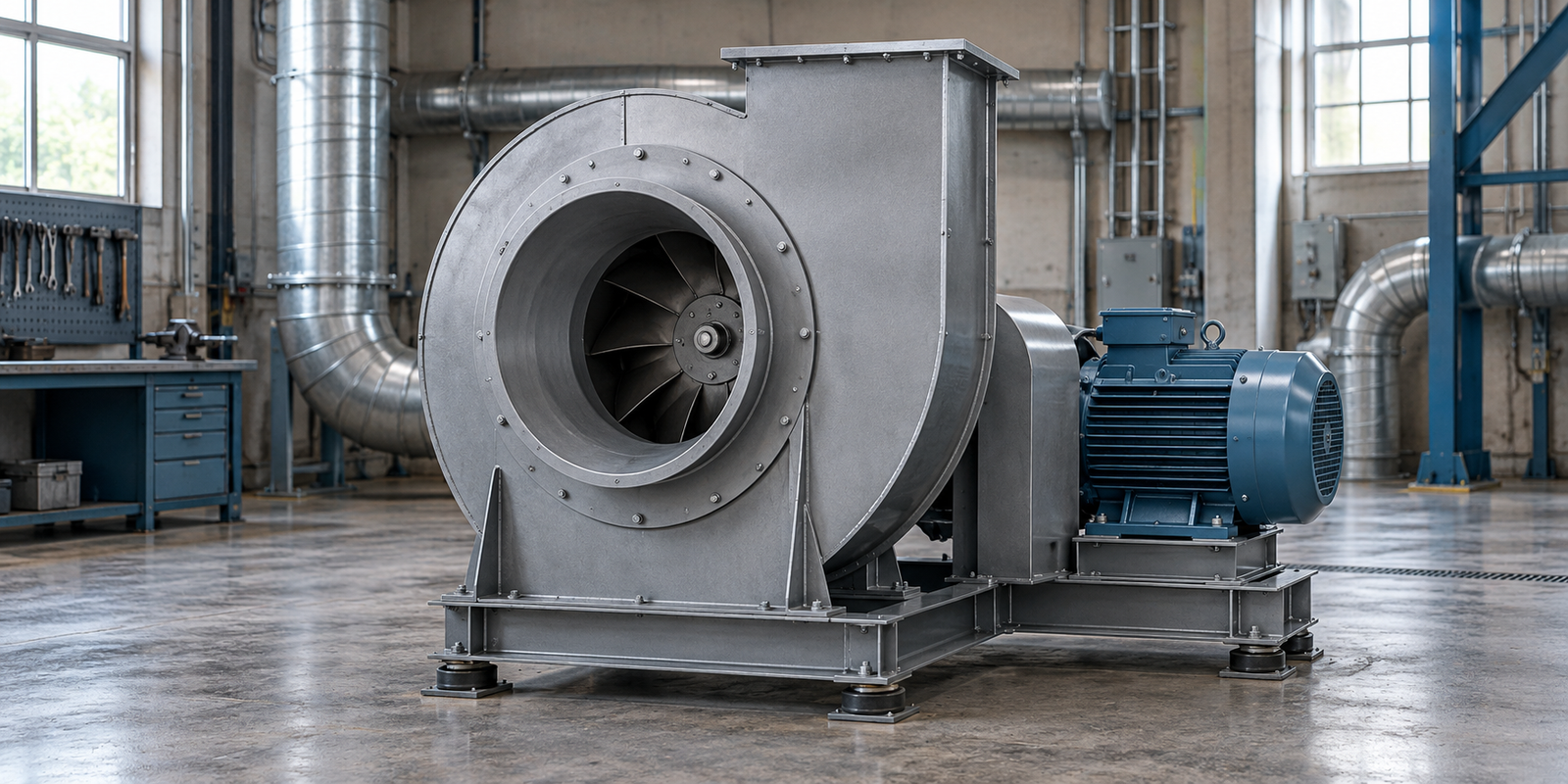
Ordering industrial fan spare parts starts with identifying the exact unit and the component that needs attention. A photograph or a visual guess is rarely enough: similar-looking assemblies can differ in mounting, rotation, materials, or electrical details. Record the fan’s identification data, capture the part in context, and ask the supplier to confirm compatibility before ordering.
1. Identify the fan before identifying the part
Start with the manufacturer name, model or series, serial number if present, and any size or arrangement code on the nameplate or equipment records. Photograph the nameplate clearly and keep the full unit in a second photo. If the label is missing or unreadable, share the purchase record, drawings, and overall views instead of guessing the model.
Also record where the fan is installed and what it handles: supply or exhaust service, the conveyed air or gas, operating temperature range, and any dust, moisture, or corrosive conditions. These details help the supplier check whether a proposed replacement suits the actual duty. They do not replace the original equipment data.
2. Describe the component and its installation
Take a close photo of the affected component and a wider photo showing how it connects to the fan. Note the component name if known, its position, mounting method, visible dimensions, and any part number or marking. For a motor, photograph its own nameplate. For a belt-driven assembly, record the existing belt markings and drive arrangement. For an impeller or wheel, note the rotation direction and how it attaches to the shaft.
Record the symptom and the evidence that led to replacement: wear, corrosion, impact damage, unusual noise, rubbing, or a failed inspection. Keep removed-part measurements and photos when practical. A part that appears to fit may still be unsuitable if its material, balance, shaft connection, or operating limits do not match the fan.
3. Confirm compatibility before placing the order
Ask the supplier to confirm the part against the fan model and configuration. Check key interfaces such as dimensions, bolt pattern, shaft or coupling connection, rotation, orientation, and electrical characteristics where relevant. Do not select a motor, impeller, bearing, or drive component by appearance alone. If the equipment has been modified, include the modification details and current drawings.
For a replacement fan rather than an individual part, share the operating point and installation constraints so the complete unit can be reviewed. The centrifugal fan series and the indfan.com product range are starting points for discussing the appropriate equipment; final selection depends on confirmed project conditions.
4. Send a clear replacement request
- Fan model, serial number, and a readable nameplate photo
- Photos of the full fan, the component, and its mounting
- Part marking, measurements, and existing drawings if available
- Operating conditions and the reason the part needs replacement
- Required quantity, delivery location, and requested delivery timing
- Any changes made to the original fan or connected system
Keep the supplier’s confirmation with the maintenance record, including the approved part description and any installation notes. If you need help matching a fan to its working conditions, use the indfan.com contact page to send the available equipment information and photos.
Frequently asked questions
Can I order a replacement part using only a photo?
A photo helps identify shape and installation, but it may not show the model, dimensions, material, or connection details. Send the nameplate and equipment records as well, and request compatibility confirmation.
What if the fan nameplate is missing?
Gather purchase documents, drawings, photos from several angles, component markings, and measurements. Clearly state that the nameplate is unavailable so the supplier can assess what additional checks are needed.
Should a replacement part be installed by any operator?
Use qualified personnel and follow the equipment manufacturer’s instructions and the site’s isolation and safety procedures. Verify that the fan cannot start unexpectedly and that hot or moving parts are safe to handle before work begins.
Accurate identification reduces avoidable back-and-forth and gives the supplier the information needed to review a replacement. When any compatibility detail is uncertain, pause the order until it has been checked.