
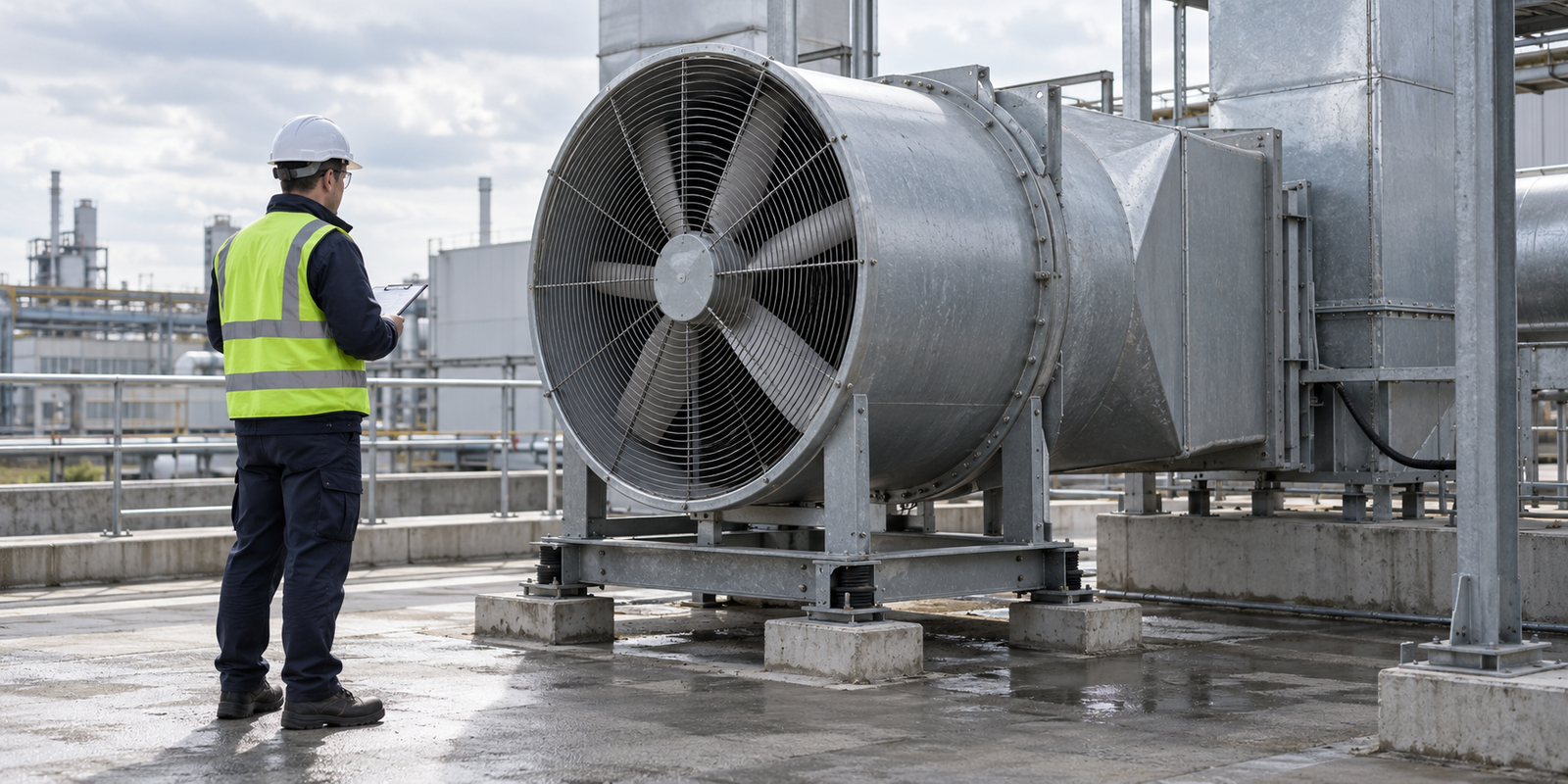
Smoke exhaust fans form part of a larger smoke control system. Routine maintenance should verify that the fan and its associated controls remain available and operate as intended. The exact test schedule and acceptance criteria depend on the system design, local requirements, and the fan and motor manufacturers’ operation and maintenance documents. This overview is a planning aid; it is not a substitute for a competent inspection or the applicable code.
What should a smoke exhaust fan inspection cover?
A useful inspection combines a visual review, an operational check where permitted, and a written record. Follow the approved maintenance plan and use qualified personnel for electrical, control, and performance tests.
1. Check the fan assembly and surroundings
Look for debris, dirt buildup, corrosion, physical damage, loose supports, damaged guards, and signs of water ingress. Where access is provided, inspect the impeller for contamination or visible damage. Do not alter blade angle, clearances, or other settings without the manufacturer’s instructions.
2. Review the motor, bearings, and mounting
Listen and observe during an authorized test for unusual noise, vibration, or movement. Check accessible fixings, isolators, and support components for deterioration. Any bearing inspection, lubrication, or electrical measurement should follow the specific motor documentation and be carried out by competent personnel.
3. Verify controls and system response
Confirm that the fan, sensors, switches, dampers, and control signals respond according to the approved cause-and-effect sequence. A fan may run locally while a system-level fault remains, so record the response of the associated equipment as well as the fan itself.
4. Keep a clear maintenance log
Record the date, equipment identification, tests performed, observations, readings required by the maintenance plan, defects, corrective work, and the person responsible. Compare results with earlier records and the manufacturer’s limits. A clear trend can help identify a developing issue before the next scheduled visit.
What should happen if a defect is found?
Document the fault and notify the responsible building or system operator promptly. A qualified fire-safety or smoke-control professional should assess the effect on system operation and any interim measures required. Do not return equipment to service or treat an impaired life-safety system as acceptable based only on a fan motor starting.
How often should smoke exhaust fans be serviced?
There is no single interval that applies to every installation. Set service and test schedules according to applicable local requirements, system design, risk assessment, and the fan and motor manufacturers’ documentation. Confirm which requirements govern the building and jurisdiction.
Frequently asked questions
Can routine maintenance be done while the fan is energized?
Inspection and service must follow the equipment safety instructions and site isolation procedures. Work that exposes personnel to moving parts or electrical hazards requires appropriate isolation and competent staff. Testing that requires the system to run should be planned and controlled under the approved procedure.
Should the same maintenance interval be used for every fan?
No. Fan duty, standby arrangements, environment, operating hours, component design, and local requirements can affect the schedule. Follow the approved system plan and manufacturer documentation.
Does a successful start test prove the smoke control system is ready?
No. A start test alone does not verify all controls, dampers, sensors, power arrangements, or the designed system response. The complete test scope should match the approved system documentation.
Related information
- Inspection frequency depends on the system and applicable local requirements.
- Related product pages:
- Follow the approved system plan and equipment manufacturers’ instructions for inspection and testing.
- HTFC Centrifugal Fire Exhaust Fan | SWF Axial-Flow Fire Exhaust Fan